
CRM consulting services are really helpful for businesses. They help businesses plan and manage customer relationship management systems. This makes it easier for businesses to talk to customers, do things efficiently and make more money. Or just installing CRM software consultants look at how the business works, find problems and come up with a plan. This plan helps the customer support team, sales team and marketing team work together using the information about customers.
A good CRM system helps businesses manage customer relationships better tasks they do over and over and see what is happening with customers at all times. Nowadays CRM consulting is more than setting up software. Experienced consultants look at how businesses handle customer questions, sales, leads, keeping customers and support.
They help businesses pick the CRM platform, connect other tools, automate tasks, train employees and get employees to use the system. It does not matter if a business uses Salesforce, HubSpot, Microsoft Dynamics or another CRM system. Consulting services make sure the system helps the business achieve its goals and does not just create problems.
For businesses in the United States that are growing, CRM consulting services are very important. They help businesses make customers happy and work efficiently. By putting customer support, sales and business information businesses can respond to customers faster, help teams work better and make decisions based on facts that help the business grow in the long run. Businesses that want to make customers happier and make support operations better can also look at what Vocals Connected Customer Support Services offers to make service better and customers more satisfied.

Why Customer Support and Sales Teams Need CRM Consulting
Customer support teams and sales teams need customer information, simple workflows and easy communication to give great experiences and grow the business.. Many companies have problems with systems that don’t talk to each other, uneven processes and incomplete customer records. This causes inefficiencies in departments.
- CRM consulting helps businesses fix these problems by creating a plan for managing customer relationships in one place.
- This way customer support agents and sales representatives have the information in real-time.
- Teams can respond faster, make customer interactions personal and give a customer experience from start to finish.
For customer support teams CRM consulting helps them see customer history, support requests, communication records and service preferences. By using many platforms or tracking interactions manually, support agents can see everything about a customer in one dashboard.
This helps teams solve issues faster, respond quicker and find problems before they affect customer satisfaction. CRM consultants also help businesses automate tasks like routing tickets, sending follow-up communications and managing cases.
This lets support teams focus on giving service instead of doing repetitive administrative tasks. Sales teams get better at managing leads, seeing their pipeline and optimizing their sales process with CRM consulting. Consultants help businesses create workflows that track prospects from the contact to conversion.
They also provide insights into customer behavior. Buying patterns. With a configured CRM system sales representatives can prioritize opportunities, automate routine tasks and build stronger relationships with customers based on accurate data.
Businesses that want to improve customer engagement and optimize their support operations can read Vocals Connected’s article on Customer Support Outsourcing Services. It shares strategies for improving service quality and operational efficiency.
Key Challenges Businesses Face Without CRM Expertise
Many businesses buy CRM software thinking it will fix everything right away, but they soon discover that technology alone cannot solve underlying operational issues. Without CRM expertise, businesses often struggle to create clear processes, maintain accurate data, and align customer-facing teams around common goals. As customer interactions increase across multiple channels, organizations without a well-defined customer relationship management strategy often face fragmented customer information, inconsistent communication, and limited visibility into customer needs. These challenges not only affect day-to-day operations but also hinder long-term growth, customer retention, and overall business performance. By understanding the fundamentals of customer relationship management, businesses can build stronger customer relationships and create more efficient workflows that support sustainable growth.
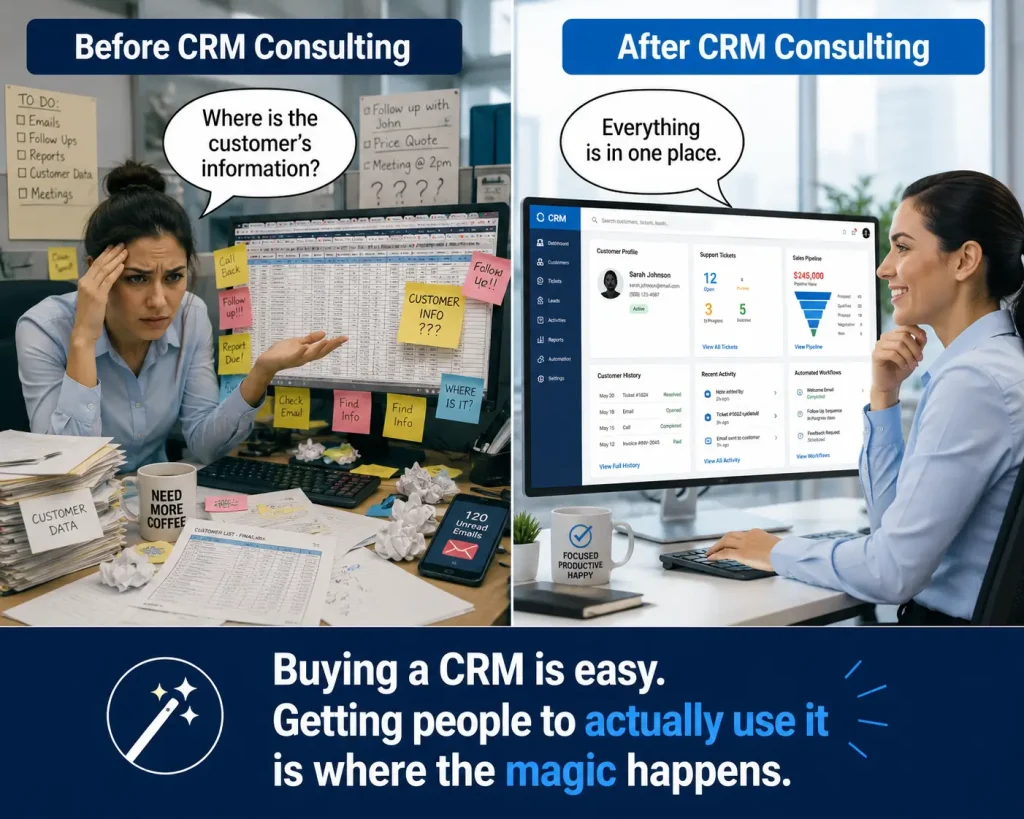
One big problem is that customer information is not all in one place. Customer details get spread out across spreadsheets, email boxes, support systems and individual employee files making it hard for teams to get the most recent information. Sales people might miss chances to sell because they do not have all the information about a customer while support teams might have a time fixing problems quickly because they do not know what happened before. This way of doing things often leads to doing the work twice answering customers slowly giving customers a bad experience and teams not being as productive as they could be. Without people who know about CRM to set up ways of managing data and workflows businesses might make decisions based on information that is not complete or correct.
Another common problem is that businesses cannot make their processes better or grow efficiently. Without expert help businesses often make workflows that people have to do by hand which takes a lot of time and can lead to mistakes. Keeping track of leads following up with customers managing support tickets and making reports can all be done differently making it hard to measure how well things are going or find ways to improve. CRM consultants help businesses make systems that can grow and that automate tasks that are repeated over and over to improve how sales and support teams work together and give information through correct reports. By using CRM expertise businesses can turn customer data into things that help them make decisions, make their operations better and build stronger relationships with customers that will help them grow in a sustainable way.
Benefits of CRM Consulting for Customer Support Teams
Customer support teams have a lot on their plate. They need to respond, solve problems quickly and give customers a great experience across many channels.. Many organizations struggle. Customer information is scattered, workflows are over the place and support agents waste time looking for answers instead of helping customers. That’s where CRM consulting comes in. It helps create a plan for managing customers that brings people, processes and technology together. CRM consultants don’t just install software; they optimize how support teams work with customers, handle information and deliver service.
I’ve been there. You get a customer who says, “I already told the three agents this.” That’s not the customer’s problem; it’s a system problem. CRM consulting fixes this by creating a hub where support agents can see accurate customer information, interaction history and service records in real-time. This leads to service, better teamwork and a more consistent customer experience that builds trust and loyalty.
Faster Response and Resolution Times
One big benefit of CRM consulting is response and resolution times. Consultants look at support workflows, find bottlenecks and automate tasks to get inquiries to the agents faster. Of manually assigning tickets or searching multiple systems, support teams have everything they need in one place.
With workflows agents spend less time on paperwork and more time solving customer issues. Automated ticket prioritization, routing and integrated communication channels reduce delays and ensure customers get timely support. Faster response times boost customer satisfaction and team productivity.
Improved Customer Data Management
Customer data is super valuable. It can get messy without proper management. CRM consulting helps businesses create a customer database that shows every interaction, transaction and support request.
When support teams have access to organized customer information they can give more personalized help and make informed decisions. CRM consultants also help businesses improve data quality, eliminate duplicate records and establish governance processes. By playing detective before every customer call, support agents can focus on delivering solutions backed by real-time insights.
Better Customer Retention and Satisfaction
Customer retention is key to growth. CRM consulting helps businesses strengthen customer relationships by creating systems that support engagement, personalized communication and consistent service delivery.
By using customer data support teams can identify recurring issues, anticipate customer needs and resolve concerns before they escalate. This proactive approach improves customer satisfaction. Reduces churn. When customers feel understood and valued they’re more likely to stay loyal. CRM consulting turns customer support from a function into a strategic driver of customer experience, retention and long-term business success.
How CRM Consulting Improves Sales Team Performance
A lot of companies buy a CRM platform thinking it will automatically make their sales team more productive and bring in money.. The truth is, just having a CRM platform does not mean you will get the results you want. What makes a CRM platform really work is how you use it, how you set it up and whether your sales team actually uses it. This is where CRM consulting comes in. CRM consulting helps sales teams work better by making sure the CRM platform is set up to work with their sales processes and business goals.
One big problem sales teams have is that they spend much time doing paperwork instead of selling. Studies have shown that sales people waste a lot of time updating records, managing spreadsheets, searching for customer information and doing the tasks over and over. CRM consultants can help fix this problem by automating tasks like tracking leads, following up with customers, managing contacts and updating the sales pipeline. This means sales people can spend time talking to customers and less time entering data into the computer. If your sales team is spending time updating the CRM platform than talking to customers then the CRM platform is not working for them.
CRM consulting also helps sales teams see what is going on with all their sales. Without a CRM platform managers can have trouble understanding what is working and what is not. Consultants can create custom dashboards and reports that show what is happening with sales in time. This helps sales leaders make decisions, find problems early and use their resources better. When sales teams can see what is going on they can make forecasts, be more accountable and sell more.
Another good thing about CRM consulting is that it helps sales teams manage leads and talk to customers better. Consultants can help companies create a plan for managing sales that ensures every lead is followed up on and tracked throughout the sales process. Automated reminders and follow-up emails can help sales teams stay organized and keep in touch with customers. By using customer data and sales automation CRM consulting can help sales teams give customers a personal experience, which can increase sales and build stronger relationships with customers.
Finally CRM consulting helps sales teams actually use the CRM platform. Even the best CRM platform is not useful if sales teams do not use it. Consultants can provide training. Help optimize workflows so that sales teams want to use the CRM platform. When sales people see the CRM platform as a tool that helps them sell better they are more likely to use it. The whole company benefits from better decision making and more sales.
CRM Implementation and Integration Best Practices
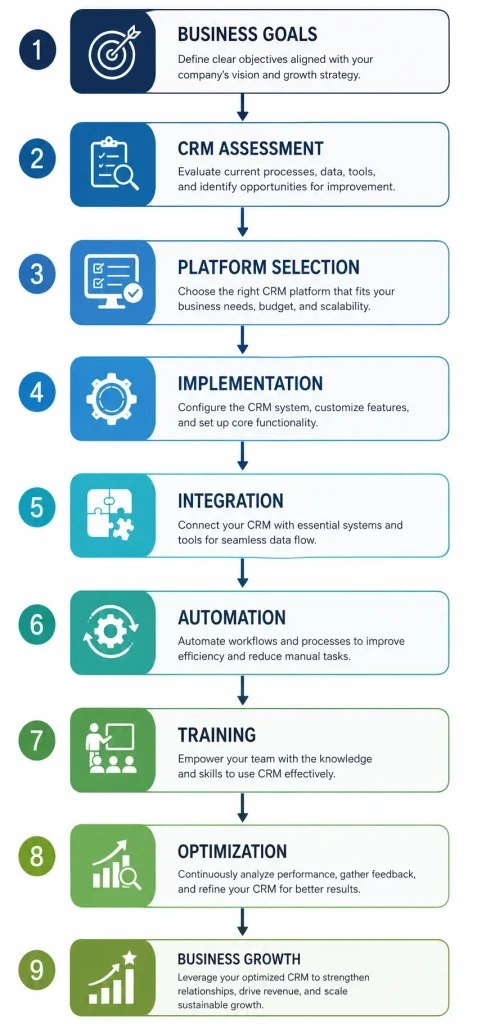
A CRM system can really help customer support and sales operations.. It works only if you do it right. Many CRM projects fail because businesses focus much on technology and forget about strategy, process design, data quality and user adoption. Experts say that implementation should start with business goals, not platform features. Before using a CRM organizations should find out what is not working, set goals and map out the customer journey to make sure it helps both customer support and sales teams.
* One of the important things is to have good data. Bad data can ruin the best CRM. Before moving information businesses should check customer records, remove duplicates and make data formats the set rules. It is also important that employees like using the CRM. They will use it more if it helps them do their job better and if they get training.
CRM integration is very important because customer information is usually in systems. Businesses use email help desk software, marketing tools and more. Integrating these systems with a CRM gives a view of the customer and removes data silos that slow down decisions. For example, support agents can see sales history and sales reps can see customer service interactions. This helps teams work together, makes customers happy and helps businesses make decisions.
* Another best practice is to see CRM implementation as a process not a one-time project. Business needs change, customers want different things and technology gets better. Regular reviews, workflow checks and user feedback help make sure the CRM keeps working. Companies that want to improve customer engagement and efficiency can check out Customer Support Services for ideas on delivering customer interactions and growing their business.
Choosing the Right CRM Platform for Your Business
When you are thinking about how to make your customer relationships better your sales work smoother. Your support team more helpful choosing the right CRM platform is a very big decision. A lot of companies that sell CRM platforms say they have the features but the truth is that no one platform is perfect for every business. The best CRM platform for you is not the one that has the features, it is the one that fits with what your business wants to achieve, how your team works, how you want to talk to your customers and what you want to accomplish in the future. Sometimes businesses pick a CRM platform just because it is popular but then they find out later that it is too hard to use, does not have the features they need or does not work with the systems they use.
Before you start looking at CRM platforms you should think about what you need to run your business smoothly. Your customer support team might need a way to manage customer cases, talk to customers on channels and automate some tasks. Your sales team might need a way to track leads, see what is happening with sales, make predictions and automate their workflow. If you know what you need it will be easier to choose a CRM platform that supports your business activities. You should also think about whether the platform can grow with your business if it’s easy to use, if it can give you the reports you need, if you can use it on your phone and if it can work with other tools you use like email help desk software and marketing automation systems.
It is also very important that your employees can use the CRM platform easily. Even if you have an advanced CRM system it will not work well if your employees do not like using it. A good CRM platform should make things easier for your employees, not harder. You should ask people from your sales, customer support and operations teams to help you choose a CRM platform so you can make sure it works for everyone. You can ask for a demo, try out a trial and see how it works in real life before you make a final decision. A lot of times businesses find out that a simpler CRM platform that is easy to use works better than a platform with a lot of features that nobody uses.
Working with a CRM consultant can really help you choose the platform. They will look at what your business wants to achieve and what challenges you are facing. What you want to accomplish in the future. Then they will recommend a CRM platform that fits with your business goals. They can also help you set up the platform, configure your workflow and integrate it with your systems so you can get the most value out of it. As customers’ expectations keep changing, choosing the CRM platform is becoming more and more important for businesses that want to make their customers happy work more efficiently and grow in a sustainable way, across their customer support and sales teams.
CRM Automation Strategies for Modern Customer Support
Customer expectations have changed a lot over the past few years. Customers now expect to get answers away. They want to be treated like individuals and they want a smooth experience when they need help no matter how they contact us.. A lot of support teams are still doing things the old way, which means they are slow to respond, have too much work to do and do not give customers a consistent experience. CRM automation can help with these problems by making tasks easier, making workflows better and letting support teams focus on what matters, which is giving customers a great experience. When we use CRM automation correctly it can change customer support from reacting to problems to actually helping customers and making the business grow.
Modern CRM platforms can do a lot more than just manage tasks. We can use them to automate things like assigning tickets, sending messages to customers, reminding them about things, and tracking. Getting approvals all while still being able to see what is going on with our customers. When we add intelligence and advanced analytics to the mix CRM automation lets us respond faster, give customers a more personal experience and find ways to get better all the time. As more and more customers need help automation becomes essential if we want to keep giving them service without spending a lot more money.
Automating Ticket Routing and Follow-Ups
One of the CRM automation strategies for customer support teams is to automate how tickets get routed. By having to manually assign customer inquiries CRM systems can automatically send tickets to the right agent based on what the issue is, how important it is to the customer, what language they speak or what skills are needed. This gets rid of delays, helps us solve problems on time and makes sure customers get help from the right person as soon as possible.
Automated follow-up workflows also make the customer experience better by making sure we do not forget about any requests. CRM systems can send emails to confirm things, give updates on status, ask for feedback and send alerts if something needs to be escalated without needing someone to do it manually. This way customers always know what is going on while we are helping them and it also reduces the amount of work our support agents have to do.
Streamlining Lead and Contact Management
Even though CRM systems are often used for sales, managing leads and contacts is also really important for customer support. Modern CRM automation helps us keep records of our customers by automatically updating their information, tracking our interactions with them and putting all their communication history in one place no matter how they contacted us.
When our support agents have all the information they need about a customer they can give them service. Automated data management reduces mistakes, gets rid of records and makes sure customer information is always accurate and easy to get to. This gives our support and sales teams an understanding of our customers, which makes the whole experience better for them.
Using AI-Powered CRM Workflows
Artificial intelligence is changing the way we do CRM automation. AI-powered workflows can look at customer behavior, predict when they will need help, find trends in support requests and suggest what our agents should do next. This helps us move from reacting to problems to actually being proactive and engaging with our customers.
For example AI can automatically categorize support requests, decide which ones are urgent, suggest responses and find customers who might be thinking about leaving us. Intelligent automation also lets us personalize how we interact with customers based on what we know about them and how they behave. As AI gets better and better, companies that use AI-powered CRM workflows in their customer support will be able to work efficiently, make customers happier and stay ahead of the competition in a market where customers are in charge.
Common CRM Consulting Mistakes and How to Avoid Them
Investing in CRM consulting can really help a business. It can make customer support better sales performance. Operations are more efficient.. Many businesses do not get the results they want. This is because they make mistakes that can be avoided. One big mistake is focusing on what the software can do or what the business needs. Companies get excited about all the features, dashboards and automation.. They forget to think about what problems they want to solve. A good CRM plan starts with goals. For example a business might want to keep customers sell more, respond faster or work more smoothly.
Another big mistake is not helping employees use the CRM. Even the best CRM system will not work if employees do not know how to use it. Many businesses spend a lot on getting the CRM.. They do not spend enough on teaching employees how to use it. This leads to employees not using the CRM much. They might even get frustrated with it. To avoid this businesses should involve employees. They should teach employees how to use the CRM. They should also ask employees for feedback. This way employees will see the CRM as a tool, not just extra work.
Bad data management is another problem. If a business puts wrong duplicate customer information into the CRM it can cause big problems. Businesses should clean up their data. They should make rules for managing data. They should check their data regularly. This way they can keep their data accurate. Also businesses should not think of CRM as a one-time project. Customer needs, technologies and business processes change over time. So businesses should keep improving their CRM. They should check how well it is working. They should make it better. They should update it. This way the CRM will keep helping the business.
By avoiding these mistakes businesses can get more out of their CRM. They can help their sales and support teams work together better. They can build relationships with their customers. This can help the business grow in a way.
How to Select the Right CRM Consulting Partner in the USA
Selecting the right CRM consulting partner is a big deal for a business when it comes to setting up or improving a customer relationship management strategy. There are a lot of consulting firms there that offer similar services but they can be very different when it comes to their experience, knowledge of specific industries, approach to implementation and ability to provide support in the long term. A good CRM consulting partner should do more than just set up software. They should understand what your business is trying to achieve, what challenges you are facing, what you want to happen with your customers and how you plan to grow. The best consultants are like advisors who help you use technology to get results that you can measure.
When you are looking at CRM consulting firms, you should first look at their experience helping customers improve sales processes, set up CRM systems, and get different systems to work together. Knowing a lot about an industry can be a big plus especially for businesses in areas like healthcare, insurance, financial services, SaaS or eCommerce. You should ask to see examples of what they have done in the past, talk to their clients and look at how they have implemented CRM systems. You should also find out whether they know a lot about CRM platforms such as Salesforce, HubSpot, Microsoft Dynamics, Zoho CRM, or Freshworks.
Communication and working together are just as important when you are picking a consulting partner. A good CRM consultant should take the time to understand what you need, give you a plan for how they will help you and set clear goals for what they want to achieve. You should be careful of firms that just talk about the features of the software without thinking about how to make your processes better, get your users to adopt the system, make sure your data is good and help you in the future. The goal is not just to get a CRM system up and running but to create a system that helps you engage with your customers, makes your business more productive and helps you grow.
Finally, businesses should consider whether a CRM consulting partner can provide ongoing support after implementation. A successful CRM strategy requires continuous monitoring, workflow optimization, user training, and system enhancements as customer expectations and business needs evolve. A consulting partner that offers long-term guidance can help organizations maximize their CRM investment while ensuring customer support and sales teams continue operating efficiently. If you’re evaluating CRM consulting solutions and need expert guidance tailored to your business goals, contact our CRM and customer support specialists to discuss how the right strategy can improve customer experiences, streamline operations, and support sustainable growth. By selecting the right CRM consulting partner in the USA, companies can build a scalable customer management framework that drives long-term success.